09:00 - 10:00
Moderator

Anne Bordeleau
Professor and Director Azrieli School of Architecture & Urbanism, Carleton University
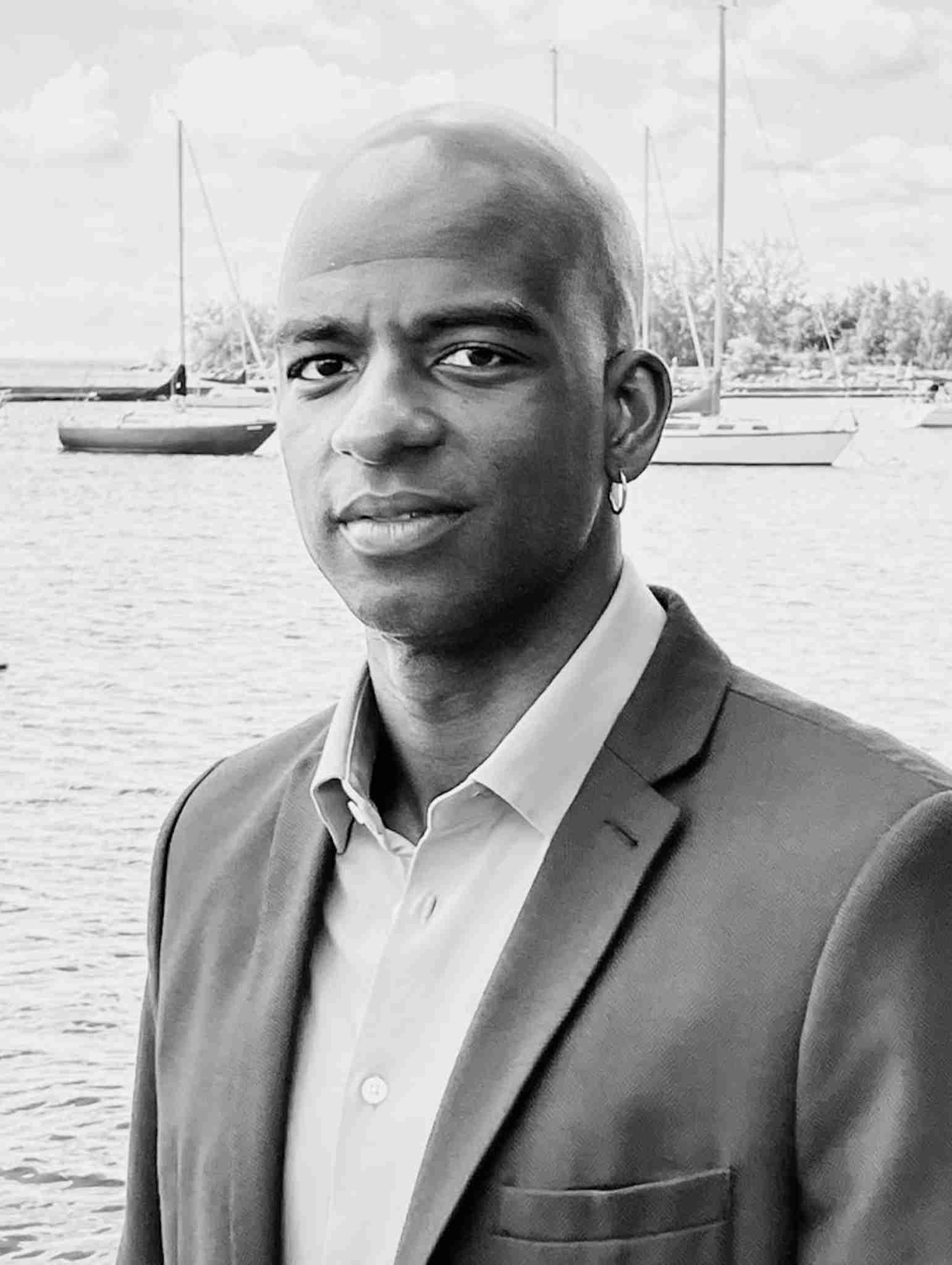
Bomani Khemet
Assistant Professor University of Toronto

Jerry Hacker
Registered Architect Ontario Association of Architects

Dr. Dorothy Johns
Assistant Professor Toronto Metropolitan University (TMU)
How might we approach our multifaceted responsibilities as designers and architects of a decarbonized future? What forms might climate actions take across questions of equity, heritage, or environmental justice? How might our agency be variously rooted in relational practices, material management, or technological knowhow? By proposing a range of climate-responsive strategies and considerations – a multi-scalar community-oriented study of modernist Swahili housing, an interdisciplinary inquiry into the retrofit of aluminum curtain wall systems, and methodical testing of bio-based systems in Canada's cold weather climates–, the presentations in this session offer glimpses into the productive collaborations between researchers, practitioners, and industry partners to re-think architecture's material and environmental engagement.
Modernist Swahili Housing: Climate-Responsive Strategies for Multi-Unit Communities
This five-minute talk presents the first occupant-centered study of modernist Swahili multi-unit housing in Zanzibar’s Karume New Town. The project integrates objective measurements and subjective perceptions to understand how heritage architecture supports thermal comfort and daily life. At the suite scale, occupant surveys & simulations examine natural ventilation, thermal comfort, and heritage-driven spatial logics. At the building scale, we model ventilation pathways, envelope performance, and culturally significant features that shape comfort and identity. At the urban scale, wind and temperature simulations incorporate landscape change, rainwater management through bioswales, tree and mangrove plantings, and increased street-level activation that supports daily activities. Coupled with occupant surveys capturing demographics, design preferences, comfort sensations, and heritage values, the research correlates lived experience with environmental data to promote housing value beyond economics while digitally preserving these buildings for local institutions.
A Collaborative Window of Opportunity for a Carbon Free Tomorrow
As of 2020, heating buildings in Canada accounted for 16% of all energy used and 13% of energy related GHG emissions. Space heating consumes the most energy (60%) due in part to the “extra energy demand to heat buildings with insufficient envelope performance.” Despite being one of the worst performing building envelopes, aluminum curtain wall assemblies are a near de facto part of commercial/institutional buildings representing as much as "50% to 100% of the exterior cladding”. This session will present the results of an NSERC funded, collaborative research project forged between architects, academia, engineers, a glazing manufacturer, and CABER (the Center for Advanced Building Envelope Research in Ottawa), designed to prototype and quantitatively evaluate a solution for the retrofit of existing aluminum curtain wall systems in cold weather climates.
Catching Carbon: Designing a Low-Carbon Future through Bio-Based Innovation
As the building industry faces an urgent mandate to de-carbonize, the intersection of architectural design and building science offers a critical frontier for innovation. This presentation introduces the work of Catching Carbon Lab (CCL) at Toronto Metropolitan University, which investigates how material choices and enclosure detailing impacts embodied carbon, energy performance, and social sustainability.
Focussing on the transition from high-carbon conventional materials to carbon-sequestering, bio-based solutions - including seaweed based insulation and mass timber - this talk explores the development of high-performance enclosure systems tailored for Canada's diverse cold climates. By integrating parametric modelling with hygrothermal field testing, CCL's research moves beyond static material performance characteristics to evaluate the real-world design, durability, and circularity of complete bio-based assemblies. Through this lens, the act of 'catching carbon' becomes more than a technical requirement; it serves as a catalyst for a new architectural vernacular rooted in the circularity, renewability and resilience of building materials.
10:15 - 11:15
Moderator

Vivian Lee
Director, Master of Architecture Program + Associate Professor, Teaching Stream University of Toronto

Michael Faciejew
Assistant Professor School of Architecture

Georgia Cardosi
Assistant Professor Université de Montréal
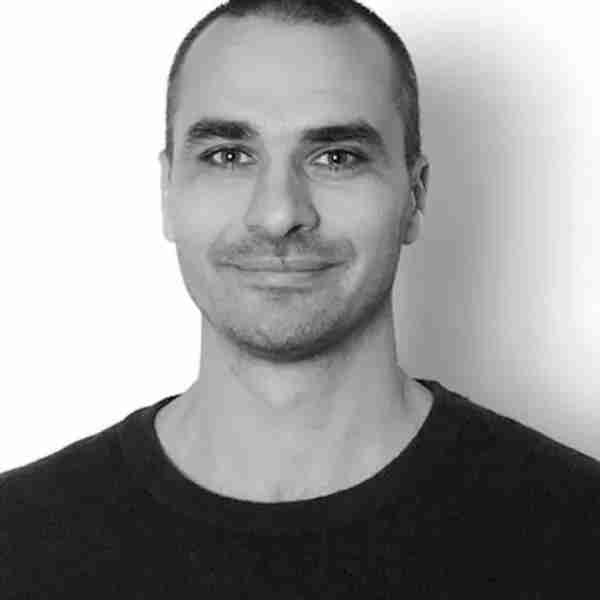
Matthew Parker
Assistant Professor University of Calgary
What does it mean to teach architecture at a moment when the discipline's tools, contexts, and assumptions are shifting? This session brings together three educators working through that question from different angles: infrastructural thinking as a framework for engaging systems and communities; close attention to how students learn to see and narrate the built world; and the challenge of recognizing genuine learning in a moment when AI can convincingly reproduce many of its outputs. Grounded in experiences from both studio and seminar teaching, the presentations open a broader conversation about pedagogical values, forms of learning, and the future directions of architectural education.
Infrastructural Thinking
This talk addresses architecture’s intersections with infrastructural systems. At a time of accelerating environmental change and social turmoil, it has become imperative to simultaneously consider multiple scales of design so that new collective futures can be imagined, and the architect’s relationship to society more meaningfully engaged. The talk complicates architecture-infrastructure dynamics by discussing: 1) a graduate-level research seminar titled “Infrastructure Space,” which introduced ethnographic and fieldwork methods to graduate students, who produced a QR-based virtual “walking tour” in Halifax on the theme of space, conflict, and infrastructural systems; and 2) a research project on “Terraqueous Architectures in Settler Colonial Canada (1867-2030)”, which examines key structures that negotiate land and water, Indigenous-settler relations, and architecture’s relationship to other design disciplines (including powerhouses, oceanography research centers, and tailings dams). Connecting technological and cultural discourses, these projects situate infrastructural thinking as a toolkit that offers critical new insights into architecture’s role in shaping communities, ecosystems, and power dynamics.
Architecture in Practice: Teaching Students to See, Know, Narrate, and Change the Real
What Counts as Learning When Mastery Can Be Simulated?
As generative AI increasingly produces outputs that mimic disciplinary mastery, architectural educators face a pressing question: how do we recognize learning when its most visible signs can be convincingly simulated? This presentation argues that the challenge is not simply about cheating or authorship, but about recognition. Specifically, it asks what forms of learning we notice, reward, and value within architectural education.
Drawing on pedagogical practices developed across undergraduate and graduate architecture studios, the presentation introduces an expanded field for recognizing rigor in architectural pedagogy, encompassing mastery, technical curiosity, joy and play, and attentive rigor. Rather than discarding mastery, this framework situates it alongside other modes of learning that are often present in studio culture but inconsistently acknowledged or assessed. These territories offer ways of naming learning that unfolds through experimentation, ambiguity, sustained attention, and close reading of work in process, not only through resolved outcomes.
Designed to spark dialogue rather than prescribe solutions, the presentation invites educators to reconsider how rigor operates across uncertainty, experimentation, and resolution, particularly in an era when mastery itself has become increasingly performable. The aim is to seed a broader conversation about how architectural educators might better recognize and support learning that cannot be easily simulated but must instead be attended to over time.
11:30 - 12:30
Moderator
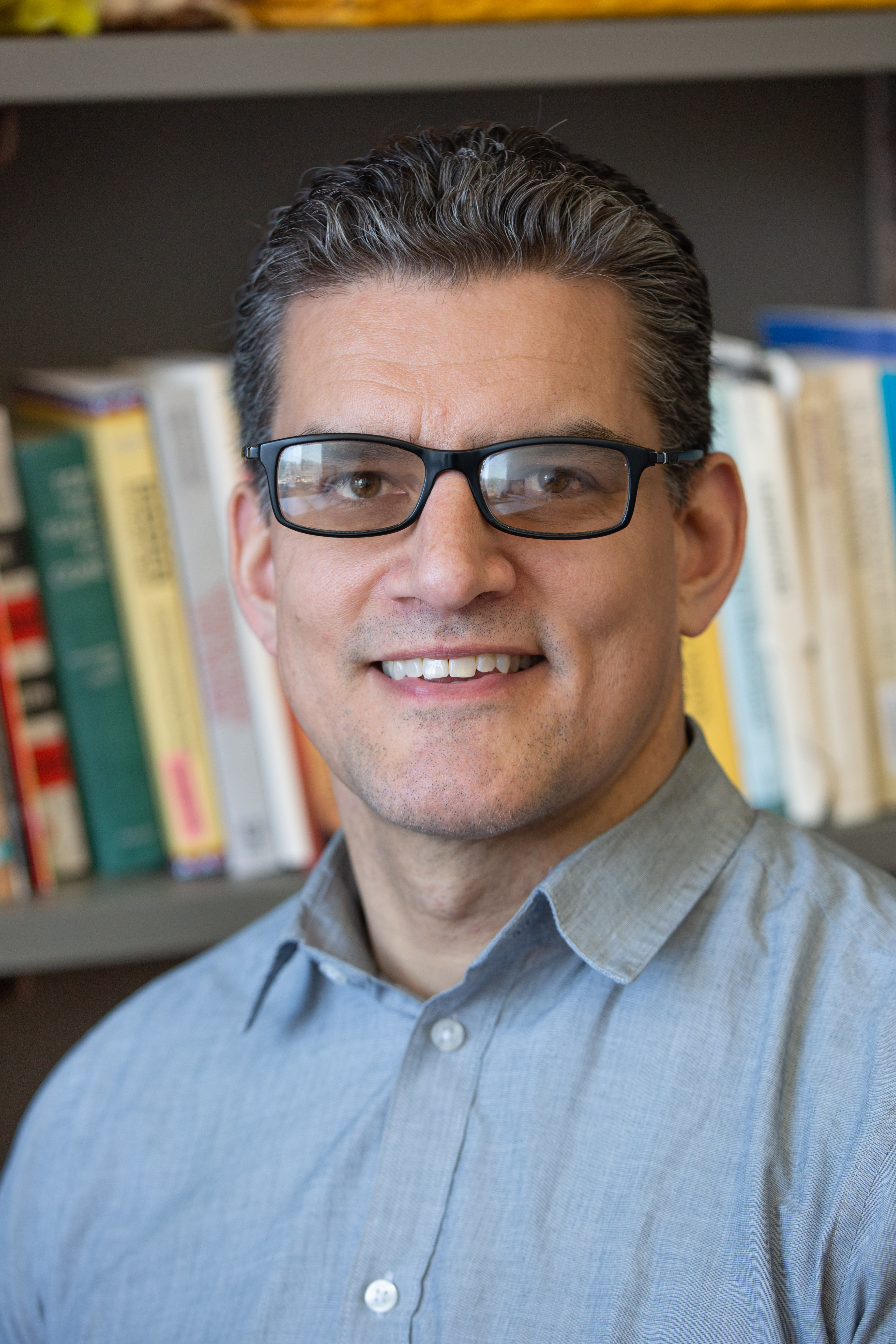
David Fortin
Professor School of Architecture, University of Waterloo

Nik Luka
Associate Professor McGill University

Steven Beites
Assistant Professor McEwen School of Architecture
James Huemoeller
Assistant Professor of Teaching The University of British Columbia
Over the past half-century, architectural research and pedagogy have increasingly branched out from academic seclusion into communities and places where experiential learning opportunities synergistically engage with local geographies and contexts. This session offers three examples of how programs in Canada are forming such partnerships and collaborations with communities, industries, and organizations. Student learning and design research are woven into reciprocal conversations about the pressing challenges we collectively face, while offering tangible insights to how rigorous design thinking, creative making, and responsible engagement can continue to inspire a positive path forward.
Design+Build as Provocation
In the 50 years of Design+Build at UBC SALA, projects have been either unconditioned constructions in light wood framing or temporary installations on UBC’s campus. Though excellent experiences, these projects have limited engagement with 21st-century building technology and processes. Building on the success of Third Space, a student initiative, SALA, with the Faculty of Applied Sciences, initiated a year-long thesis course that combines research, design and building to address these shortcomings. This program aims to achieve three goals: showcase the ongoing research of faculty seeking to address the pressing problems facing our built environment, build partnerships with like-minded industry and community partners, and equip our students with the skills required to reshape practice. The ensuing potential of the resulting permanent installations should also provoke dialogue within our professional and social communities about alternative approaches to improving the places we live.
Institute for Northern Housing Innovation (INHI)
The presentation will highlight the recent establishment of the “Institute for Northern Housing Innovation (INHI)” at Laurentian University’s McEwen School of Architecture. The Institute has emerged from more than five years of housing related research and curriculum development delivered through graduate studios and lecture-based courses, in collaboration with Northern communities and industry partners. This work has explored the integration of advanced technologies as a means to unlock new territories for delivering more socially responsible and sustainable housing interventions. With funding secured from all levels of government, and with the acquisition of advanced equipment and the construction of a new 3,100 sq. ft. facility, the INHI will serve as a place of research and training, a living lab and a catalyst for housing innovation, dedicated to improving affordability, sustainability, and the overall health, well-being and resilience of people and communities across Northern Ontario.
On Doing No Harm: Stewardship of community engagement in educating architects
There has been a surge of interest over the last two decades among students, practitioners, and educators in engaging with diverse publics and various communities of practice. While this should be celebrated as a sort of 'awakening' vis-à-vis participatory design, it comes with great risks, for universities and practitioners can easily end up acting extractively or otherwise causing harm, even where their intentions are honourable and their actions are undertaken in good faith, especially where stakeholders and participants are members of vulnerised communities. This presentation highlights principles arising from almost three decades of action-research, community-based design, and experiential (studio) learning in the St Lawrence Lowlands. Framed by the normative work of Joan Tronto and others on ‘caring with’ as well as case-based insight from collaborative projects on commoning, stewardship, and participatory planning, it offers a preliminary agenda for doing no harm when architecture education intersects with community engagement.
14:00 - 15:00
Moderator

Lisa Landrum
Chair Architectural Science, Toronto Metropolitan University (TMU)

Terri Fuglem
Associate Professor University of Manitoba
Kearon Roy Taylor
Assistant Professor, Teaching Stream University of Waterloo

Sara Stevens
Associate Professor and Chair, Urban Design University of British Columbia
Architectural education in Canada grew from European-Beaux Arts traditions and, over the decades, has typically followed trends south of the border. In recent years, transnational initiatives like the Canadian Architecture Forums on Education (CAFÉ), and leadership in Indigenous placemaking and curriculum development, have created unique venues and values in the Canadian-Turtle Island context. This session explores the potential for new networks and counter-narratives for architectural scholarship, criticism and discourse. Presentations range from 1930s architecture school exercises, to a recent cross-Canada super-studio led by members of Architects Against Housing Alienation (AHAA), to propositions for new infrastructures of solidarity amid heightened scrutiny of equity topics in architectural research.
Visions for the Canadian West: A Retrospective of Architectural Education at the University of Manitoba 1913-1939
This talk will explore visions for the Canadian west as evidenced in hundreds of examples of student work that were recently recovered from tunnel storage rooms. Many of the drawings are exercises in Ecole des Beaux Arts rendering techniques of historical styles. However, a large number present grand building designs that are meant to convey the future institutions needed to colonize the Canadian West. These projects convey the imperative that this new, sparsely populated land requires Europeanization as a blueprint for the emergence of a civil society. Set against the context of the great depression, the same pedagogy that propelled the creation of the new school continued until the rupture of the second world war after which its educational aims retooled for rapid modernization in the wake of the postwar economic boom.
Cross-Canada Superstudio to End Housing Alienation!: An Experiment in Connecting Students
Can a studio build a movement? Architectural studios are typically taught in isolation or with discrete local partners or collaborators. But if architectural education has ambitions beyond the meeting of accreditation requirements and hopes to address the grand challenges of our era, new models might be needed.
Schools across Canada have come together this academic year to simultaneously teach design studios around a shared goal: To end housing alienation. This Superstudio meets a momentous pedagogical challenge: To prepare tomorrow's designers to create housing that meaningfully contributes to improving housing for all. At the heart of the Superstudio format is the belief that there is a profound strength in numbers and that all big challenges require collaboration. Seventeen studios and courses are participating in this Superstudio to share knowledge, inspiration, and foster solidarity.
Inspired in part by the Green New Deal Superstudio organized across the U.S. recently, the Superstudio to End Housing Alienation has been organized by the Canadian collective Architects Against Housing Alienation (AAHA). Working from a shared set of principles, it seeks to raise awareness, to connect researchers and instructors, to fuel creativity, and to challenge normative approaches to housing design. From the perspective of one of the organizers of AAHA, this paper will situate, describe, and reflect on this Superstudio, its aims and philosophy, and the opportunities within schools of architecture to use teaching as a vehicle for action.
Parallel Networks: Building Infrastructures of Solidarity in Canadian Architectural Scholarship
The 2025 cancellation of a special issue of the Journal of Architectural Education and the dissolution of its editorial board by the Association of Collegiate Schools of Architecture mark a rupture in North American architectural scholarship. For Canadian academics, this moment makes visible a long-standing vulnerability: our deep dependence on U.S.-based journals, conferences, and editorial institutions to legitimate and circulate our work.
On the Canadian side, few comparable networks exist. Most institutional coordination focuses on accreditation, licensure, or professional representation, leaving knowledge production, critique, and public discourse structurally under-supported. For early-career faculty, this is particularly troubling: access to scholarship, mobility, and intellectual risk-taking are increasingly constrained.
The proposed pecha-kucha will take stock of existing networks of scholarship and association within the discipline in Canada, and make the urgent call for robust, critically-engaged channels of dialogue and discourse between Canadian schools of architecture.
